

Kinshasa, August 7th, 2025 (CPA).- The provinces of Haut-Katanga, Lualaba, Kongo Central and Tanganyika have been presented on Thursday in Kinshasa by the Mining Cadastre (Cami) during a press café as the four holders of mining titles in the Democratic Republic of Congo. « Haut-Katanga remains the most active province, with 675 titles in 2024 compared to 755 titles in 2025, (…) Lualaba, another mining province, has also seen a significant increase, from 617 to 687 titles, (…) Kongo Central shows a strong growth, from 229 titles in 2024 to 243 in 2025, (…) The province of Tanganyika experiences an increase in titles, from 225 in 2024 to 238 in 2025, mainly in exploration permits and exploitation permits, » has declared Popol Mabolia, General Director of the Mining Registry. According to the source, the increase in Haut-Katanga is mainly in the categories of exploitation permits (PE), exploration permits (PR) and permanent quarry exploitation authorisations (AECP). The General Director of Cami has explained that Lualaba has made significant increases in exploitation permits and exploration permits. As for Kongo Central, this development is justified by a substantial increase in permanent quarry operating authorisations (AECP) and quarry product exploration authorisations (ARPC). Finally, he has specified, Tanganyika displays an increase in its titles, mainly in exploration permits and operating permits. Generally speaking, a total of 3,295 mining titles has been registered in May 2025 by the Mining Registry, compared to 3,046 in the same period in 2024, representing a significant overall increase of 8% on average, according to the General Director of this public institution. ‘The cadastral register shows a notable change between the end of May 2024 and the end of May 2025. The total number of titles registered has risen from 3,046 in 2024 to 3,295 in 2025, marking a significant global increase of 8% on average,’ he has revealed. The conference have been organised under the theme: ‘Transparency and clean-up of the mining cadastral register: towards responsible governance of the national mining sector’. Mr Mobolia has announced that between 2024 and 2025, the increase in mining titles is largely driven by the following categories: exploration permits (PR) with 1,978 titles in 2025 compared to 1,816 titles in 2024; exploitation permits (PE), with 641 titles in 2025 compared to 606 titles in 2024; and permanent quarry exploitation authorisations (AECP), which will increase from 232 titles in 2024 to 251 titles in 2025. This trend, he has continued, reflects a growing interest in the exploration and exploitation of mineral resources in the Democratic Republic of Congo, demonstrating increased dynamism in the mining sector.
Status of the title grants between January and May 2025
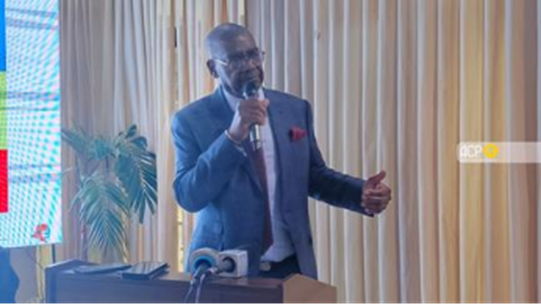
The General Director of Cami has also declared that between January and May 2025, the mining cadastre has recorded the granting of 143 mining and quarry titles covering a total area of 3,130 mining squares. « A careful reading of the data reveals a very high concentration of these titles in two provinces in the south of DRC, namely Haut-Katanga and Lualaba. These two territories alone account for 69% of the total number of titles issued (36% and 33% respectively) and 69% of the areas granted (33% for Haut-Katanga and 36% for Lualaba), » he has indicated. He has specified that this situation reflects the historical roots of industrial mining activity in this region, particularly in relation to copper and cobalt mining, but it also raises questions about the geographical balance of investment and the development of the potential of other regions. In this context, it is imperative for the state to adopt a differentiated incentive policy, specifically targeting areas with high potential but neglected by investors, has argued DG Mabolia. ‘It is precisely in this context that Article 220 of the Mining Code takes on its full relevance, providing a legal basis for the Prime Minister to grant economic stimulus measures to provinces suffering from a lack of infrastructure, in order to promote their development through the exploitation of their natural resources,’ he has concluded. CPA/