

Kinshasa, April 9th, 2026 (CPA).- Uprooted families, vulnerable communities, children deprived of schooling: this is the reality of the humanitarian crisis described on Thursday by the Prime Minister of the Democratic Republic of the Congo (DRC) during the first annual meeting of the National Humanitarian Coordination Framework (CNCH) in Kinshasa, according to a press release. “Beyond the figures, there is a shocking reality: uprooted families, vulnerable communities, children deprived of schooling and territories under the strain of insecurity,” said Judith Suminwa, quoted by the source. The Head of Government referred to a persistent security and humanitarian crisis, marked in particular by mass population displacements, increased pressure on basic social services, as well as difficulties in accessing water, healthcare and education.
In light of this situation, Judith Suminwa emphasized the need for a thorough reform of the CNCH’s operations. She set out guidelines for its transformation into a more strategic body, based on better coordination and strict adherence to the roles of each stakeholder. She also reaffirmed the Government’s commitment, under the leadership of the President of the Republic, to guaranteeing “rapid, safe and unhindered” humanitarian aid, whilst emphasizing the safety of humanitarian teams. The Prime Minister’s objective is to achieve concrete results by initiating the transition from the emergency phase to a process of stabilization.
Expected recommendations and clear priorities
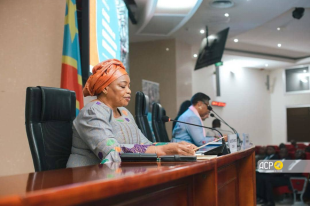
The Minister in charge of Social Affairs, Humanitarian Action and National Solidarity, Ève Bazaïba
The Minister in charge of Social Affairs, Humanitarian Action and National Solidarity, Ève Bazaïba, expressed the hope that the proceedings would lead to “realistic and immediately actionable” recommendations, in line with the expectations of the population and respecting national sovereignty.
She also highlighted the main items on the agenda for this session, including: the continuity of essential social services across the entire territory, including in crisis-affected areas; the removal of administrative and fiscal barriers hindering humanitarian action, particularly regarding taxation, customs clearance, immigration and registration. She also spoke of strengthening the Government’s engagement with countries in the sub-region, particularly in eastern DRC, to facilitate access and humanitarian operations. Established by Decree No. 13/008/2013 of January 13th, 2013, the National Humanitarian Coordination Framework aims to improve information-sharing among stakeholders, enhance the effectiveness of interventions, facilitate the transition from humanitarian aid to development, and resolve difficulties encountered on the ground in interactions with state services. Against a backdrop of multidimensional crises, this meeting aims to revitalize this strategic tool and strengthen the collective response to humanitarian emergencies affecting millions of Congolese people. ACP/