

Kinshasa, July 8th, 2025 (CPA) . – The musical talent of Gizenga Antoine, an iconic figure in the political history of the Democratic Republic of the Congo (DRC), was revealed by a Congolese researcher during an interview with CPA on Tuesday. ‘Beyond his struggle, his ideologies and his political commitment as leader of the Unified Lumumbist Party (Palu), Antoine Gizenga is a songwriter, lyricist and rhythm guitarist,’ said Franklin Mokho, a researcher in contemporary history.
‘He was an excellent singer who gave dozens of his songs to big names in modern Congolese music. Unfortunately, these contributions are rarely mentioned in the annals,’ he added.
Among the works attributed to him, according to the researcher, are ‘Congo, bwatu na kati ya ngombe’, ‘Kesho, nita ku kanyanga’, ‘Congo moboti wa ngayi’ and ‘La vérité ne se cache jamais indéfiniment’, which were composed during his exile abroad. ‘The accompanying records undoubtedly prove his contribution to the evolution of modern Congolese music,’ said the researcher.
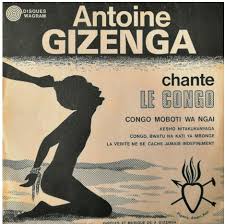
(A music box set by Gizenga)
This revelation was confirmed by Samuel Malonga, a music columnist in the DRC. He pointed out that in his album ‘Antoine Gizenga chante le Congo’ (Antoine Gizenga sings the Congo), released after 1971, the songwriter criticized the change of the country’s name. ‘Through his music, the artist Gizenga raised awareness and shared with the national public his ideology based on nationalism and his commitment to awakening the people mired in the intricacies of Mobutu’s regime,’ he explained. For Samuel Malonga, the musical works of the Palu leader were unfortunately unpublished and often produced in limited numbers. « His extremely rare record was released under the Wagram label. Antoine Gizenga’s political single bears the number AG 1, which is his initial as a songwriter. It is virtually unknown to the Congolese and had no impact in the country, » lamented the Congolese music columnist. He concluded: ‘This superb 45 rpm single has artistic and, above all, political value in that it reflects the ideals of a man who held important positions in the Congo.’