

Kinshasa, February 22nd, 2026 (CPA) – Several proposals have been submitted to the Congolese government to structure and industrialize the fashion sector in the Democratic Republic of Congo (DRC), during a forum held Sunday by textile experts and cultural operators aimed at boosting the clothing arts economy for the benefit of sector actors. “Congolese fashion represents an important economic, cultural, and social lever. We proposed that the Congolese authorities consider the creation of a Fashion and Textile Fund (FMT), the establishment of textile factories, support for SMEs, tax relief, promotion of ‘Made in Congo’, and vocational training. We are seeking support from the Ministry in charge of Culture, Arts, and Heritage to implement these proposals,” said Didi Kembola, initiator of the forum. “These discussions, organized via videoconference as part of the citizen and cultural reflection forum, allowed us to develop these relevant and strategic proposals to also submit to the relevant ministries (economy, vocational training, labor, industry) to structure and industrialize the fashion sector in the DRC,” he added. For the initiator, the objective of the meeting was not only to structure the sector but also to develop small and medium-sized enterprises (SMEs), promote employment, and strengthen Congolese identity through clothing arts.
“Everything started from observations in Kinshasa, where we noticed the absence of industry, weak institutional support, difficulty in accessing financing, and lack of collective organization among fashion professionals,” he noted.
Call for a Cultural Bank
Participants also suggested creating a cultural bank to help the DRC energize and monetize the sector. “I suggest the creation of a cultural bank where operators, artists, and professionals, directly or indirectly involved in culture, subscribe under the Congolese State’s framework. It would operate like a regular bank. Could we organize as a cooperative to establish a textile factory? This would give the fashion sector a degree of autonomy,” proposed Samy Kalonji, cultural operator.
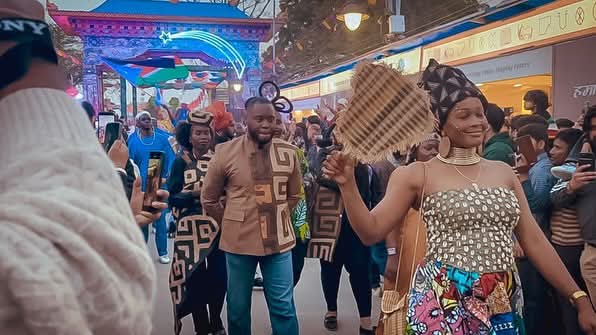
The issue of local consumption was also raised during the virtual meeting. “We must ‘consume Congolese’ or dress in Congolese fashion to support our national designers. This would be beneficial. We should encourage makers of traditional handwoven fabrics, like kuba cloth. Today, our patterns, such as kuba, are reproduced by a major European brand. What are we doing to claim ownership of these fabrics?” said Joss Kalim, singer and follower of *The Sape* (Society of Elegant People). “Our ministers dress in Made in China fashion. When they have money, they wear major European brands. Everything starts with self-love, embracing our culture, and acknowledging our local raw materials,” she added. For her, it is unacceptable that traditional cloth is presented as national identity when the DRC no longer produces it locally. “Wax and others are Dutch, English… Even when we think we identify ourselves by wearing traditional cloth, we are enriching the colonizers,” concluded the *Sape* advocate.